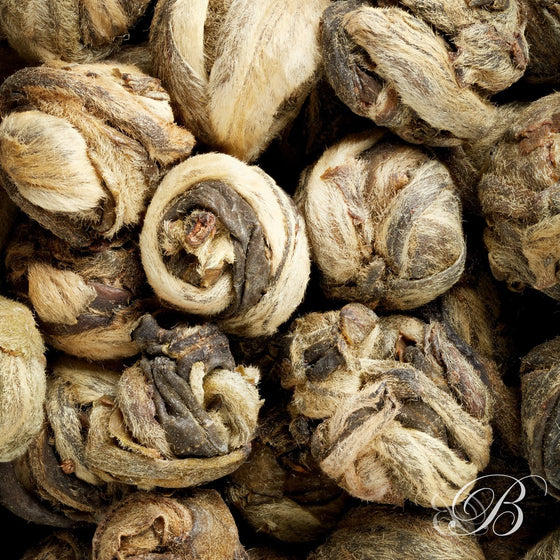
White teas

As precious and pure as a diamond, white tea is undoubtedly the Rolls Royce of teas. Minimally processed and manipulated during its production, it is defined as a true concentrate of natural antioxidants. Good for the body and delicious for the palate, white tea is available in various exceptional varieties across our extensive catalog of French-made and British-inspired teas.

Take a break and let yourself be enchanted by the sensoriality of one of our precious white teas , to be consumed with pleasure in all seasons, for summer evenings and winter days full of sweetness.

Noce de thé White

White tea flavored with yuzu, rose, orange blossom and lotus

Regular price From 19,90 €
Sale price From 19,90 € Regular price 19,90 €
Unit price  per 

Nepal Tea Shangri La Organic Superior

Organic Nepalese tea with vanilla notes

Regular price From 29,00 €
Sale price From 29,00 € Regular price 29,00 €
Unit price  per 

White tea Pai Mu Tan Organic Supérieur
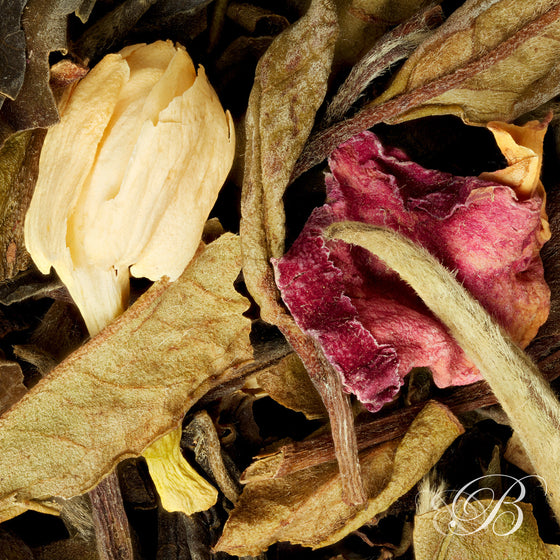
Organic China tea with cocoa notes

Regular price From 13,10 €
Sale price From 13,10 € Regular price 13,10 €
Unit price  per 

Les Invités - white tea

White tea flavored with jasmine, rose and lychee

Regular price From 23,80 €
Sale price From 23,80 € Regular price 23,80 €
Unit price  per 

White Earl Grey

White tea flavored with bergamot

Regular price From 29,40 €
Sale price From 29,40 € Regular price 29,40 €
Unit price  per 

White tea Yin Zhen

Exceptional fresh and delicate Chinese tea

Regular price From 67,00 €
Sale price From 67,00 € Regular price 67,00 €
Unit price  per 

White tea White Monkey Organic

Organic China tea in a sweet and aromatic cup

Regular price From 25,20 €
Sale price From 25,20 € Regular price 25,20 €
Unit price  per 

Jasmine Yin Zhen

Jasmine-flavored white tea. A must-have

Regular price From 86,10 €
Sale price From 86,10 € Regular price 86,10 €
Unit price  per 

Thé blanc Tai-Mu

Light and delicate Chinese tea

Regular price From 24,60 €
Sale price From 24,60 € Regular price 24,60 €
Unit price  per 

White tea White Pearl

Gunpowder green tea

Regular price From 28,20 €
Sale price From 28,20 € Regular price 28,20 €
Unit price  per 

Green tea Wild Tea Buds Superior

Very delicate Chinese tea

Regular price From 37,50 €
Sale price From 37,50 € Regular price 37,50 €
Unit price  per 

White teas

White tea, an elixir of youth with a delicate fragrance

Visually first, white tea differs from itsblack tea counterparts,green teasAndoolong teasby its color of a soft pale yellow after infusion. Tastefully then, it is distinguished by light flavors and without bitterness, capable of positively surprising the palates less accustomed to the taste of tea.

It was in China, in the famous Fujian province, that white tea was born. It is generally believed thatthe traditional method of making white teasdates back to the Ming Dynasty, in the 16th century to be precise. Other Asian countries such as India, Indonesia and Nepal also produce excellent white teas.

At Betjeman & Barton, white tea has Chinese or Nepalese origins and reflects the centuries-old expertise of our tea house. Grown in the Fujian province or facing the Himalayas, our Grands Crus promise you a unique sensory experience with every sip.

While the unique production of white tea guarantees its balanced flavors and exceptional quality, it also explains the many virtues long attributed to this deliciously captivating, aromatic beverage. White tea is rich in benefits, but it is not a miracle cure for all our ills.

At Betjeman & Barton, we consider tea drinking a healthy, yet simple and authentic pleasure. Drinking a cup of tea is the perfect excuse to dream, reflect, or simply relax.

What could be more pleasant and authentic, then, than a white tea from an internationally renowned French tea house? Through our online store, you will findvarious white teas with a refreshing taste, in a natural version for raw pleasure, like ourChinese white tea Yin Zhenor subtly scented on themodel of our “Earl Grey” white teawith the fresh and fruity scent of bergamot or our“Tea Wedding” blendcombining the sweetness of white tea with the acidity of yuzu and the fragrant notes of rose.

Our white teas also manage to seduce the most gourmands thanks to slightly sweet notes. Thus, ourNepalese white tea “Shangri La”features subtle notes of vanilla and dried fruits, while ourChinese “Pai Mu Tan”is accompanied by irresistible notes of cocoa. Meaning “white peony”, Pai Mu Tan or Bai Mu Dan is also considered THE traditional white tea par excellence.

Our collection of white teas ultimately proves that white tea is sufficient in itself, but that its refinement is also enhanced by carefully selected plant ingredients.

What are the stages of making white tea?

Like other teas, thewhite tea comes from Camellia sinensis, a small tree with great powers. However, only the newly opened buds and the young leaves that accompany them are needed to produce this tea, which owes its name to the silvery down that covers the picked buds and leaves. Harvesting therefore takes place at the beginning of spring, followed by withering and drying.

On the one hand, the withering of buds and leaves is traditionally carried out outdoors or in tea granaries, depending on the climatic conditions. To achieve good quality white tea, the moisture content of the buds and leaves must be less than 20% after the withering stage.

On the other hand, drying is carried out in a hot air dryer, on shelves or in basins, to achieve a humidity level below 5%. While withering can take up to 3 days, drying lasts less than an hour. Here again, white tea is an exception, since it experiences the least oxidation and therefore has the lowest theine level compared to other types of tea.

The white tea is finally sorted by handand ready to be infused and then consumed. Made with the greatest delicacy, respecting ancestral know-how, it also deserves to be drunk according to the rules of the art.

Under what conditions should you enjoy a cup of white tea?

Every moment of the day is conducive totasting of an exceptional white teaInfused in low-temperature water, between 75 and 80°C, for 5 to 10 minutes on average, white tea retains all its qualities and flavor.

When steeped for a long time, white tea is generally less exciting than other teas, especially since its brewing temperature moderates the diffusion of theine into the beverage. It can therefore be enjoyed as much upon waking as at tea time or in the evening. As a bonus, its light aroma pairs perfectly with pastries and other sweet treats.

Sold in bulk from 100 g to 1 kg, thevarious Betjeman & Barton white teasare offered and savored without moderation, flattering the taste buds of connoisseurs and neophytes alike. Choose without further delay the tea that will take you to the heart of Asia without having to leave the privacy of your home.

Thé blanc : les questions fréquentes

1. Quel thé blanc choisir entre un Yin Zhen et un Pai Mu Tan ?

Le Yin Zhen, composé uniquement de bourgeons, offre une tasse d'une grande finesse, délicate et raffinée. Le Pai Mu Tan, qui associe bourgeons et jeunes feuilles, se montre plus ample et légèrement plus corsé. Le premier pour l'exception, le second pour un thé blanc de tous les jours.

2. Quel thé blanc pour découvrir cette famille à petit prix ?

Le Pai Mu Tan, thé blanc traditionnel par excellence, est notre plus belle porte d'entrée dans cette famille : accessible et représentatif, il séduit néophytes comme connaisseurs.

3. Le thé blanc convient-il à ceux qui trouvent le thé habituellement trop fort ou trop amer ?

Tout à fait. Très peu transformé, le thé blanc offre des tasses douces, légères et sans amertume, idéales pour qui trouve le thé habituellement trop puissant.

4. Pourquoi certains thés blancs comme le Yin Zhen sont-ils nettement plus chers ?

Sa rareté explique son prix : le Yin Zhen se compose exclusivement de bourgeons argentés, cueillis un à un aux premiers jours du printemps. Cette récolte exigeante, en très petite quantité, en fait un grand cru d'exception.

5. Le thé blanc est-il celui qui contient le moins de théine ? Peut-on en boire le soir ?

Le thé blanc figure en effet parmi les thés les moins chargés en théine, d'autant qu'il s'infuse à basse température. On le savoure ainsi à toute heure, y compris en soirée.

6. Combien de temps se conserve un thé blanc en vrac ?

Comme le thé noir, le thé blanc se conserve bien : plusieurs années à l'abri de l'air, de la lumière et de l'humidité, dans une boîte hermétique et opaque.

7. Peut-on réinfuser un thé blanc plusieurs fois ?

Oui, le thé blanc supporte plusieurs infusions successives. Allongez simplement le temps à chaque passage pour en révéler toute la délicatesse.

8. Quelle quantité de thé blanc prévoir par tasse ?

Comptez environ 2 g de feuilles, soit une bonne cuillère, par tasse. Le thé blanc étant volumineux, soyez généreux, et infusez 5 à 10 minutes dans une eau à 75-80 °C.